$ cat iceberg/redundancy
Redundancy
Two nodes on separate providers.
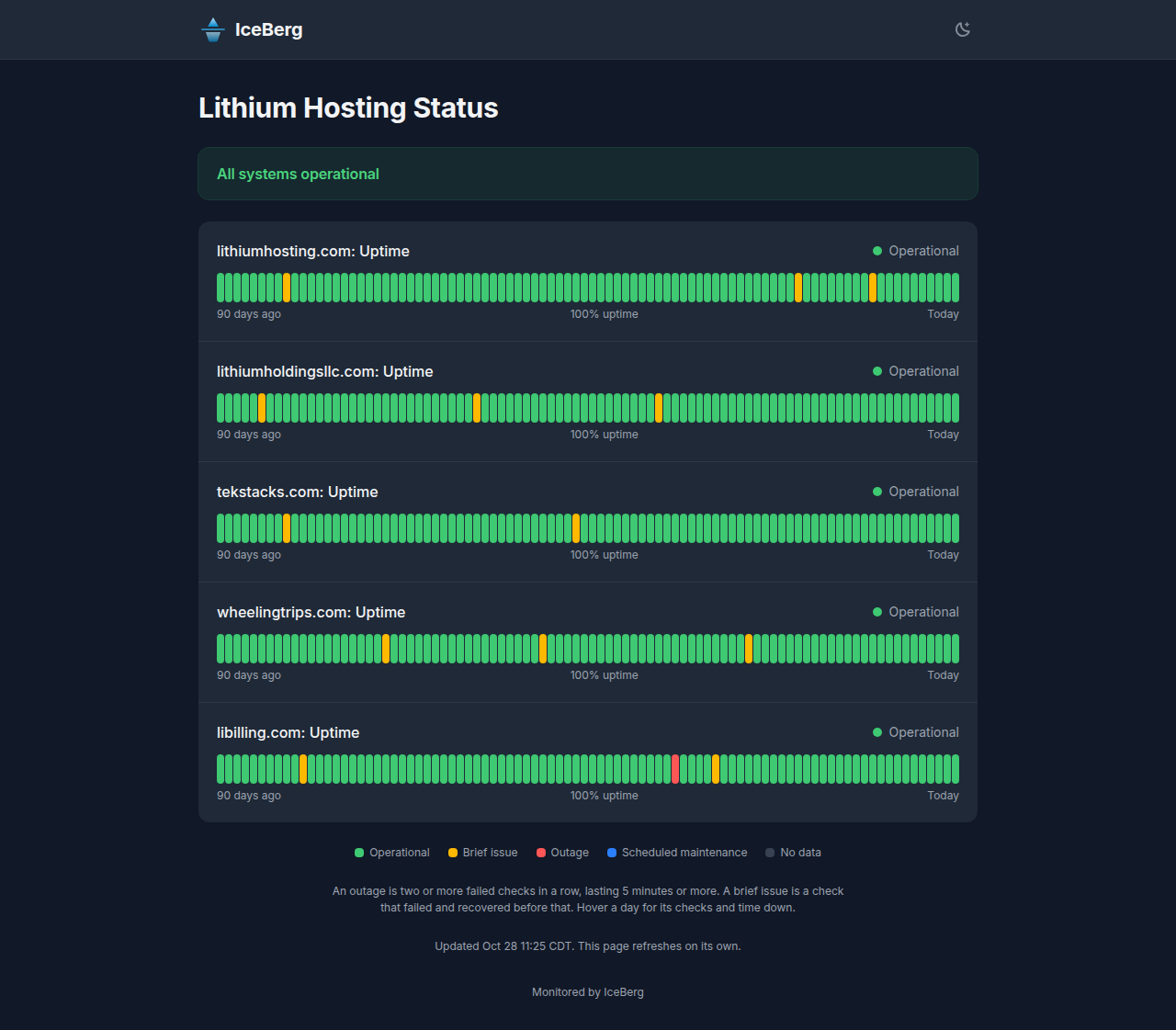
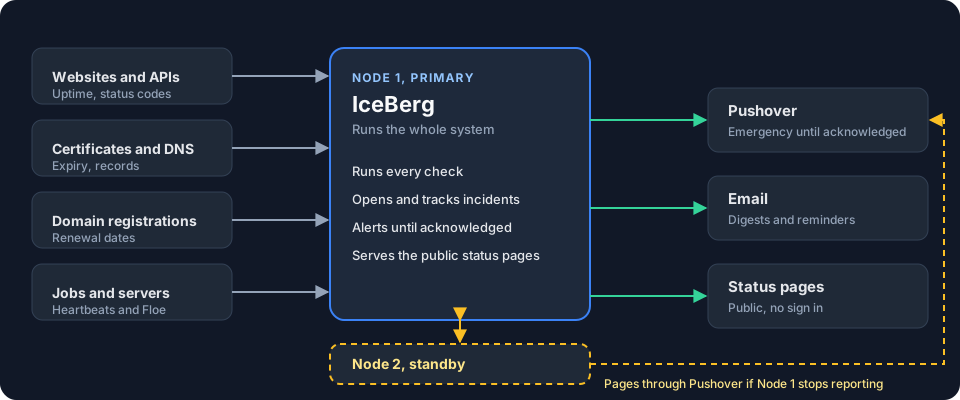
The primary runs every check, sends the alerts and serves the public status pages. A standby on a second network watches the primary and pages me if it ever goes quiet, so a monitoring outage never goes unnoticed.
$ cat iceberg/coverage
Coverage
Jobs and servers, not just sites.
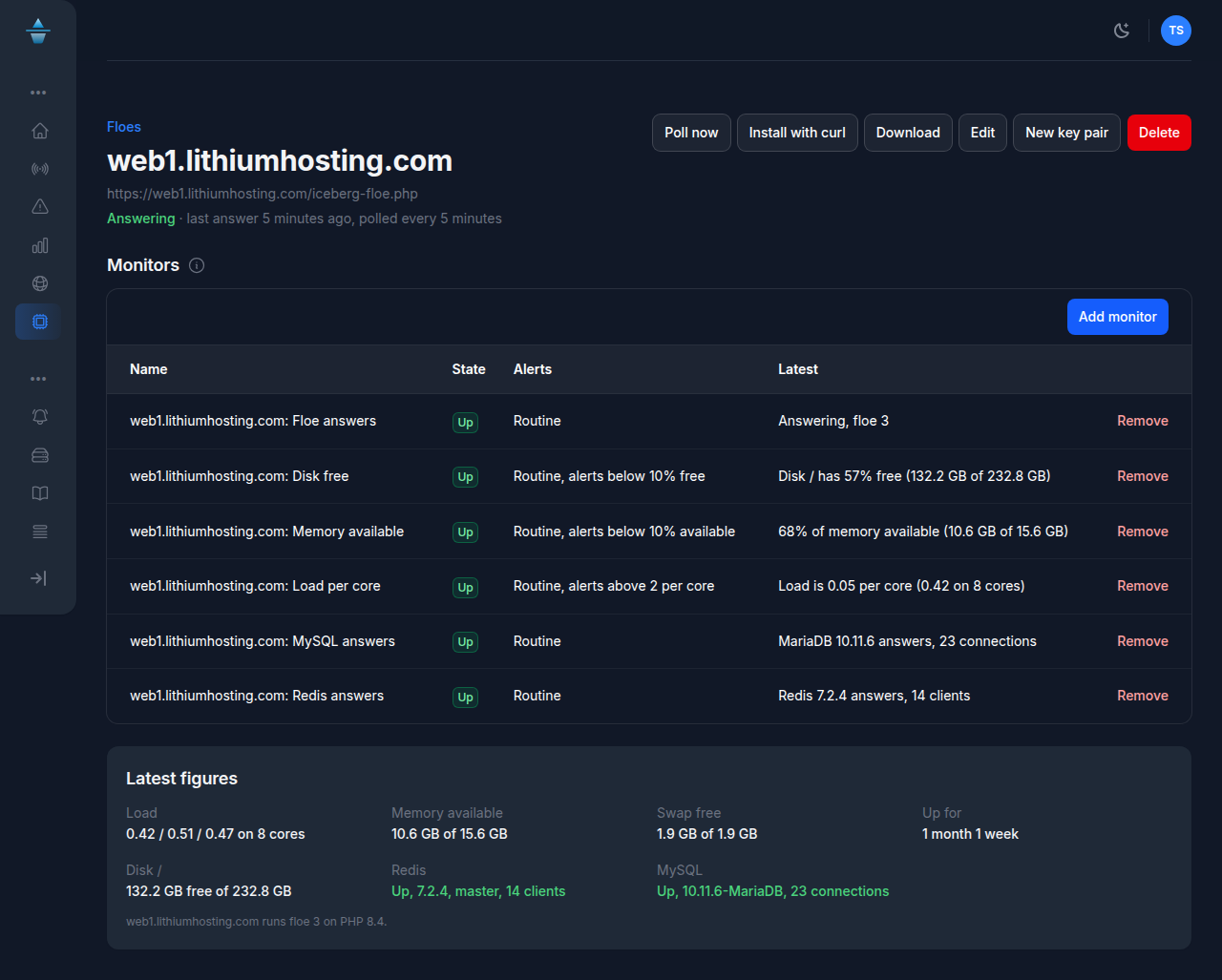
Floe, a lightweight signed agent, reports load, memory, disk and database health from each server without credentials ever leaving the machine. My Laravel applications report their scheduled jobs through a heartbeat package I publish. Certificate and domain expiry are tracked for every site I run.
$ cat iceberg/alerting
Alerting
Pages until someone owns it.
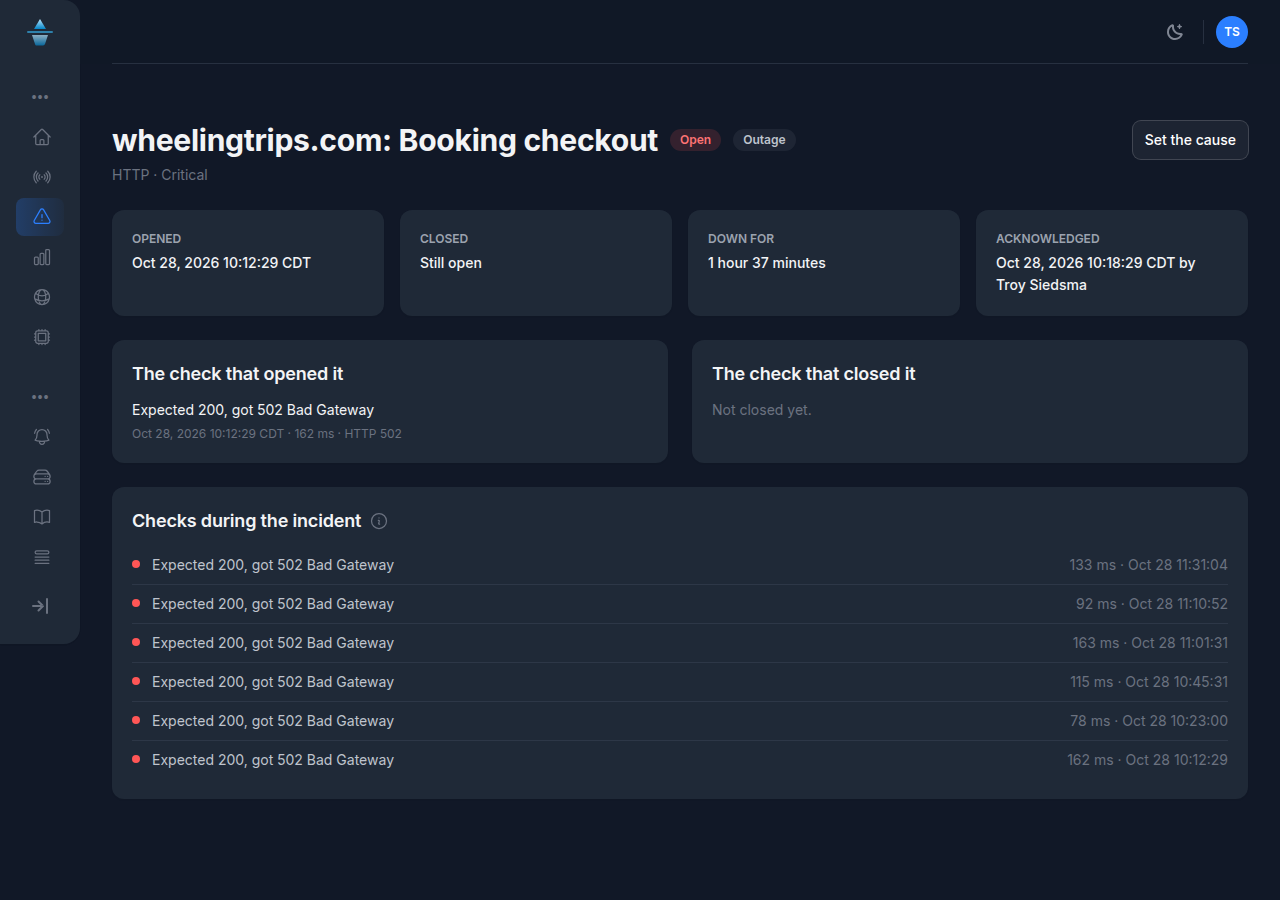
Critical alerts keep paging until someone acknowledges the incident in IceBerg, not just on their phone. Certificates and domains send reminders well before they expire instead of raising false outages. Public status pages give clients an honest view of service health, with maintenance labeled separately from outages.
$ cat iceberg/ai-assistants
AI assistants
Ask it in plain language.
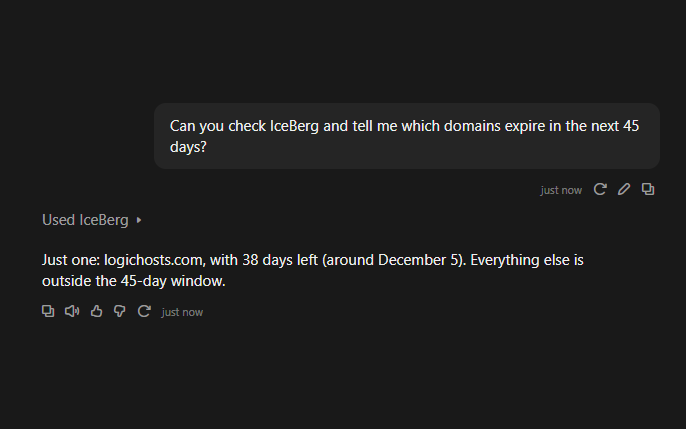
Through its MCP server and a scoped API, I can ask what is down, acknowledge an incident or start monitoring a new site, and every change is logged with where it came from.
$ ls iceberg/deps
- Laravel 12
- PHP 8.4
- Livewire
- Horizon
- MariaDB
- Redis
- Pushover
- MCP